When someone hears “clutch replacement,” it is easy to picture one worn friction disc being swapped for a new one.
On a MINI Countryman S ALL4, the real repair can be much more involved than that.
We recently serviced a 2016 MINI Cooper Countryman S ALL4 at Chuck’s Auto Repair – Shoreline with just over 131,000 miles.
During the road test, the clutch engagement position showed wear consistent with a clutch system that was ready for replacement.
The vehicle was still driveable.
The clutch had not reached the point where the car simply would not move.
But the way it engaged told us the system was worn enough to justify discussing replacement.
And once that repair begins, the clutch disc is only one part of the story.
On this MINI, the approved repair included:
transmission removal and installation
along with related components and fluid service required to complete the job.
That is why a clutch replacement can become a major mechanical repair even though the part most drivers think about is relatively small.
The Clutch Was Still Working — So Why Replace It?
A clutch does not have to fail completely before wear becomes noticeable.
On this MINI, our technician evaluated the clutch during a road test and found that the engagement position reflected normal wear.
That is important.
The recommendation was not based on:
“MINIs always need clutches at this mileage.”
It was based on how this individual vehicle’s clutch was actually behaving.
As a clutch wears, the engagement characteristics can change.
Drivers may notice the clutch taking up at a different point in the pedal travel, a change in feel, or eventually slipping under load.
Not every vehicle behaves exactly the same way, which is why a road test matters.
Getting to the Clutch Is a Big Part of the Job
The clutch sits between the engine and transmission.
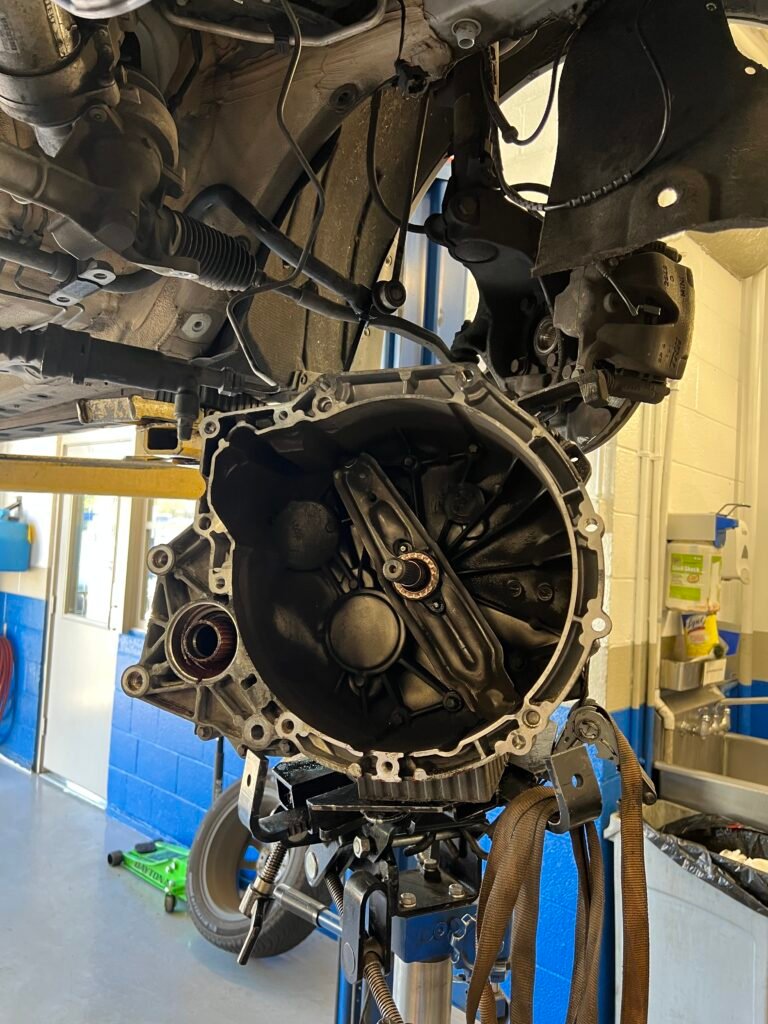
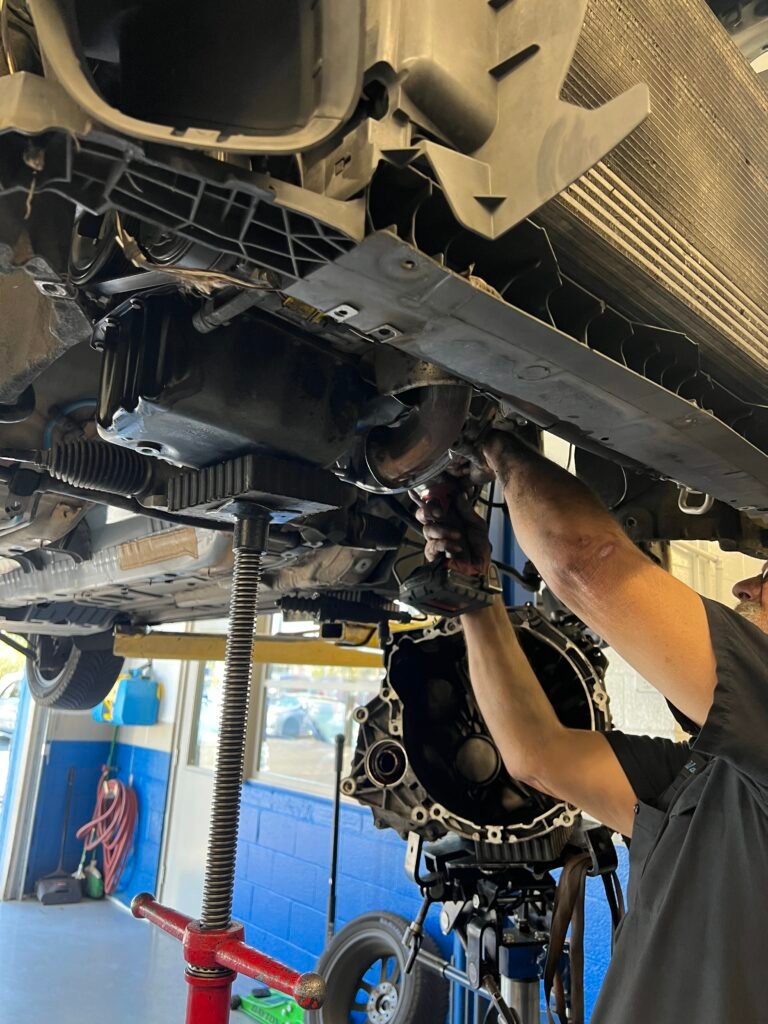
That means the transmission has to come away from the engine before the clutch assembly can be accessed.
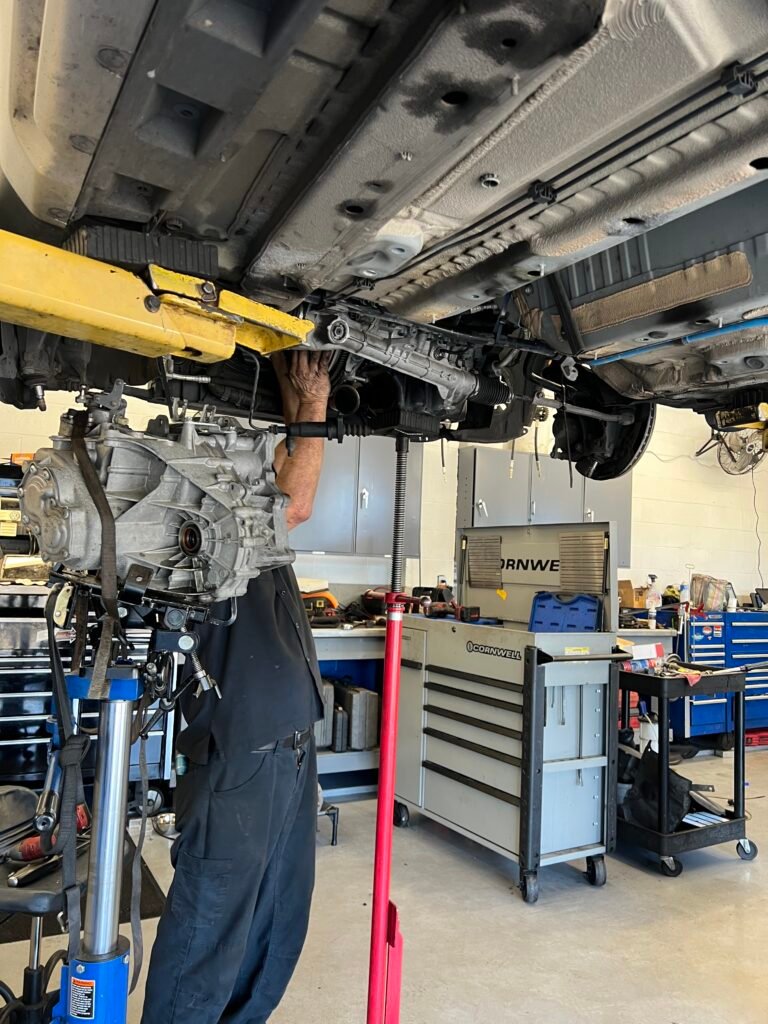
The photos from this repair show just how much work happens before anyone even gets to the clutch disc itself.
Components have to be moved or removed for access.
The transmission has to be supported.
Connections, mounts and related components have to be dealt with carefully.
Only after the transmission is separated from the engine can the technician reach the clutch and flywheel.
That access work is a large part of why clutch replacement is not simply a quick external repair.
The Clutch Disc Is Only One Piece
The clutch disc is the part most people picture when they hear the word “clutch.”
It is an important friction component.
But it works as part of a system.
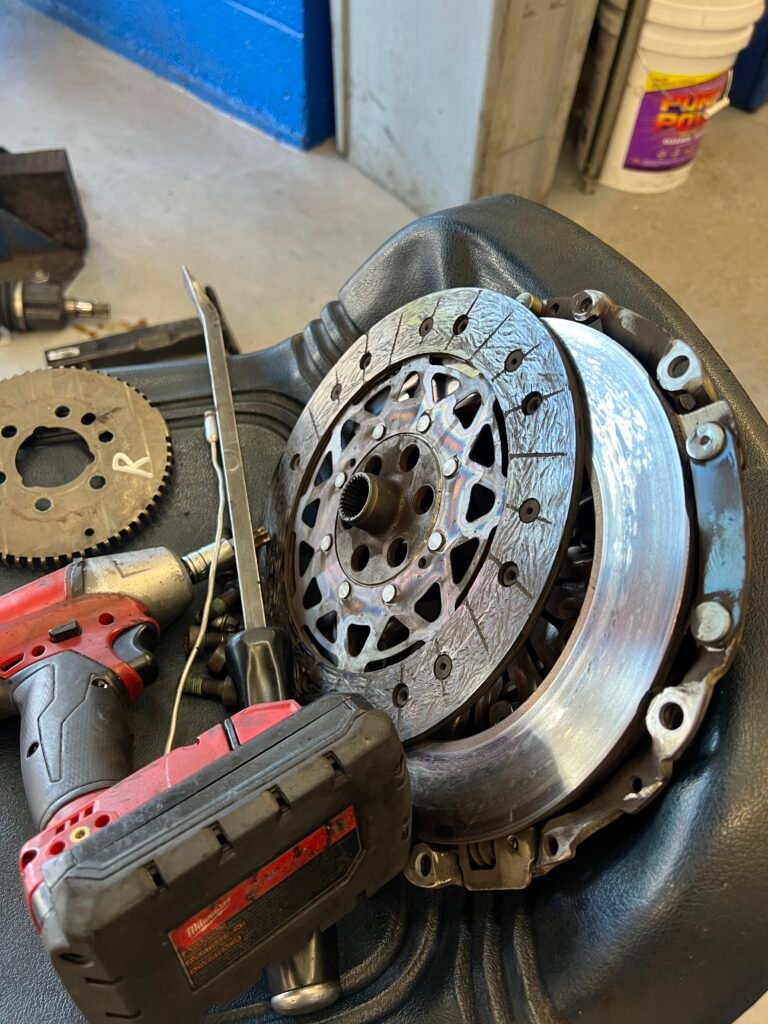
On this MINI, the repair included the clutch disc along with the:
pressure plate
release bearing
and
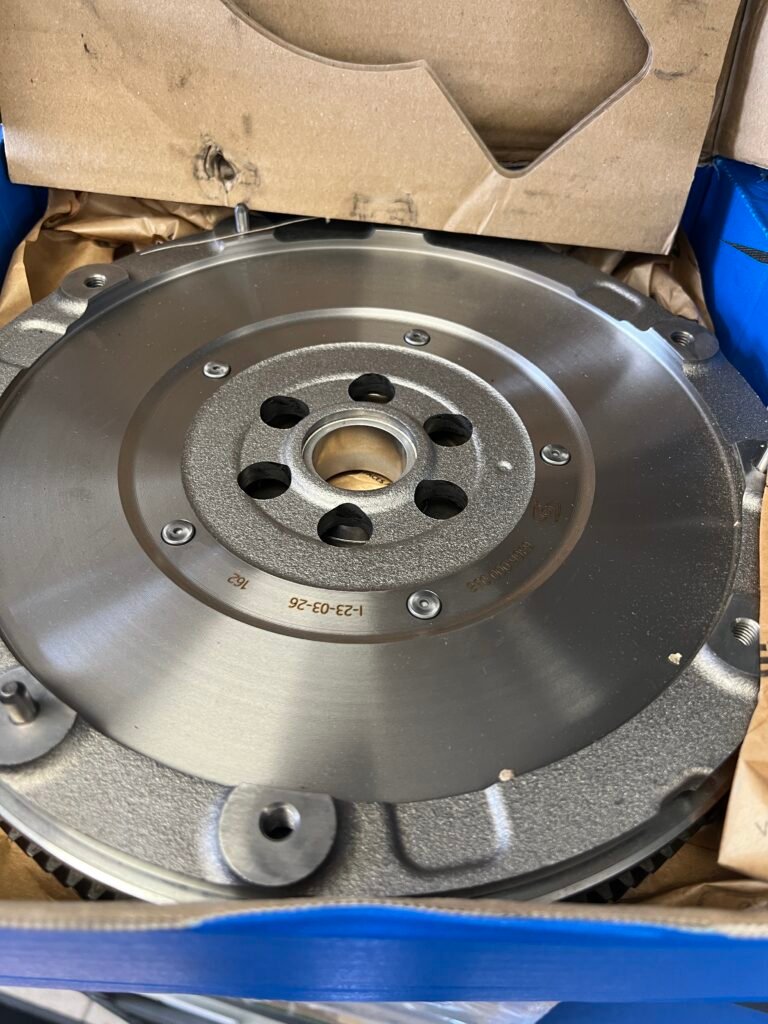
dual-mass flywheel.
The pressure plate applies clamping force to the clutch disc.
The release bearing is involved when the clutch pedal is operated and the clutch is disengaged.
And the flywheel provides the surface the clutch works against while connecting the engine side of the system to the transmission side.
Each component has a different job.
That is why a complete clutch repair is not simply:
“Take out the old disc and put in a new disc.”
What Is a Dual-Mass Flywheel?
This MINI used a dual-mass flywheel.
In simple terms, the flywheel sits between the engine and clutch/transmission system and is designed to help manage vibration and smooth the transfer of power through the drivetrain.
Unlike a simple solid flywheel, a dual mass unit contains internal movement and damping elements.
That makes its condition part of the clutch repair conversation.
On this particular Countryman, the repair plan included replacing the dual-mass flywheel along with the clutch assembly.
That does not mean every MINI clutch replacement automatically requires a new flywheel.
The exact repair depends on the vehicle, components and condition found during inspection.
Why Replace More Than the Disc?
Once the transmission has been removed, we have access to the entire clutch system.
The sensible question is not:
“What is the cheapest single component we can replace?”
It is:
“What does this clutch system need while we already have it apart?”
The labor required to remove and reinstall the transmission is significant.
Putting the system back together around another worn or questionable component can create the possibility of paying for much of that access work again later.
That doesn’t mean replacing every nearby part automatically.
It means inspecting the complete system and making a repair plan while access is available.
On this MINI, the chosen repair included the clutch assembly and dual-mass flywheel together.
The Clutch Disc Is the Part You Usually Picture
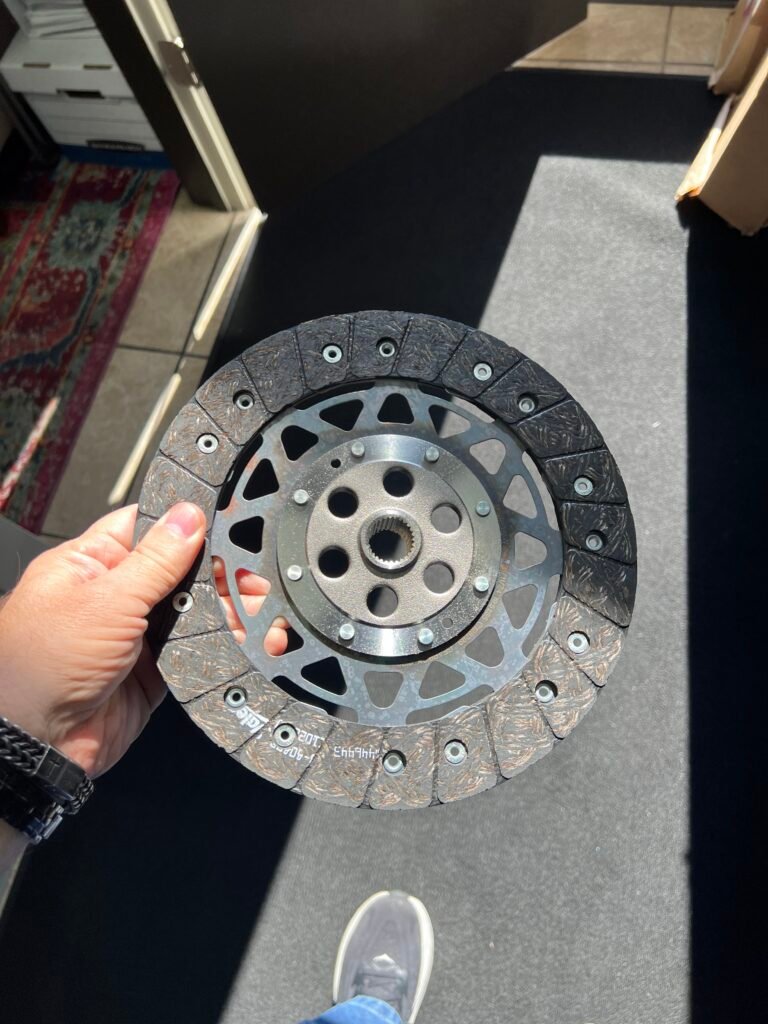
When people think of a clutch, this is usually the component they imagine.
The disc has friction material that is clamped between the flywheel and pressure plate when the clutch is engaged.
That allows engine power to move through the transmission.
But the disc cannot do its job by itself.
It is part of the larger assembly we’ve been discussing.
Why Replace More Than the Disc?
Once the transmission has been removed, we have access to the entire clutch system.
The sensible question is not:
“What is the cheapest single component we can replace?”
It is:
“What does this clutch system need while we already have it apart?”
The labor required to remove and reinstall the transmission is significant.
Putting the system back together around another worn or questionable component can create the possibility of paying for much of that access work again later.
That doesn’t mean replacing every nearby part automatically.
It means inspecting the complete system and making a repair plan while access is available.
On this MINI, the chosen repair included the clutch assembly and dual-mass flywheel together.
The Clutch Disc Is the Part You Usually Picture
When people think of a clutch, this is usually the component they imagine.
The disc has friction material that is clamped between the flywheel and pressure plate when the clutch is engaged.
That allows engine power to move through the transmission.
But the disc cannot do its job by itself.
It is part of the larger assembly we’ve been discussing.
Why the ALL4 Layout Matters
This was not just a basic two wheel drive MINI.
It was a Countryman S ALL4.
The exact drivetrain configuration matters whenever a major drivetrain repair is planned.
That’s why we identify the exact year, engine and drivetrain before applying repair procedures.
We do not assume every MINI clutch job is identical just because the badge says MINI.
How Do You Know When a Clutch Is Worn?
There isn’t one universal symptom.
Some drivers first notice:
a changing engagement point
slipping under acceleration
engine speed rising without a matching increase in vehicle speed
difficulty getting power to the ground
or
changes in pedal feel or engagement quality.
On this Countryman, the technician’s road test found the engagement position consistent with normal clutch wear.
That was the key finding behind the repair recommendation.
Should You Wait Until the Clutch Completely Fails?
Usually, waiting until a clutch can no longer move the vehicle does not create an advantage.
If the engagement behavior has changed or the clutch begins slipping, having it evaluated earlier gives you more control over the repair decision and timing.
You may be able to schedule the work rather than dealing with a vehicle that suddenly becomes difficult or impossible to drive.
Does Every MINI Countryman Need a Clutch at 131,000 Miles?
No.
This article describes one real 2016 MINI Countryman S ALL4.
Clutch life depends heavily on how the vehicle is driven, where it is driven and how the clutch has been used over its lifetime.
Two vehicles with identical mileage can have very different clutch condition.
We diagnose the vehicle in front of us.
Mileage is context not the diagnosis.
Why This Repair Is More Than “Replace the Clutch”
This Countryman is a good example of why clutch repair estimates can surprise people.
The customer isn’t paying simply for a small disc.
The real repair involves:
access
transmission removal
inspection
multiple clutch-system components
flywheel work
related seals and connections when appropriate
fluid service
reassembly
and
road testing.
When you look at the actual repair photos, the scope makes much more sense.
MINI Countryman Clutch Repair FAQ
Does a clutch repair mean only replacing the clutch disc?
No. On this MINI Countryman S ALL4, the repair included the clutch disc, pressure plate, release bearing and dual-mass flywheel, with the transmission removed to access the system.
What is a dual-mass flywheel?
It is a flywheel design used to help manage drivetrain vibration and smooth power transfer between the engine and transmission. It is a separate component from the clutch disc.
Does every MINI clutch job require a new dual mass flywheel?
Not necessarily. This particular repair included one. The exact flywheel decision should depend on the vehicle and what the repair procedure and inspection support.
Can a clutch be worn even if the car still drives?
Yes. This MINI was still driveable, but the technician found engagement behavior consistent with normal wear during the road test.
Why does the transmission have to come out?
The clutch is located between the engine and transmission. Removing the transmission creates the access needed to service the clutch and flywheel.
Was this MINI leaking oil from the rear main seal?
The technician specifically documented that the vehicle’s underside was dry and no leak was present at the inspected seals. The seal-related work later appeared on the invoice as overlapping labor while transmission access was already available.
MINI Clutch Repair in Shoreline
If your MINI’s clutch engagement has changed, the pedal feels different or the clutch begins slipping, you don’t have to determine which clutch component is worn before calling us.
We can road test the vehicle, inspect the system and explain what the repair actually involves.
Chuck’s Auto Repair – Shoreline
14501 15th Ave NE
Shoreline, WA 98155
206-368-0980
Schedule service through the link here Book Online / Schedule Appointment