
A brake pedal that keeps moving toward the floor under steady pressure is something that needs to be diagnosed.
During a bumper-to-bumper inspection on this 2010 Chrysler Town & Country, that is exactly what we found.
The pedal would fade downward while pressure was being applied.
There was no obvious external brake fluid leak.
So the next question was simple:
Where was the braking pressure going?
A Sinking Brake Pedal Is a Symptom, Not a Diagnosis
A driver may describe a brake pedal as soft, spongy, low or slowly sinking.
Those descriptions are useful because they tell us what the vehicle is doing.
But they do not identify the failed part.
On this Town & Country, further testing confirmed the pedal was going toward the floor.
The brake fluid was also very dirty.
At the same time, we did not find an external brake fluid leak.
That narrowed the direction of the diagnosis.
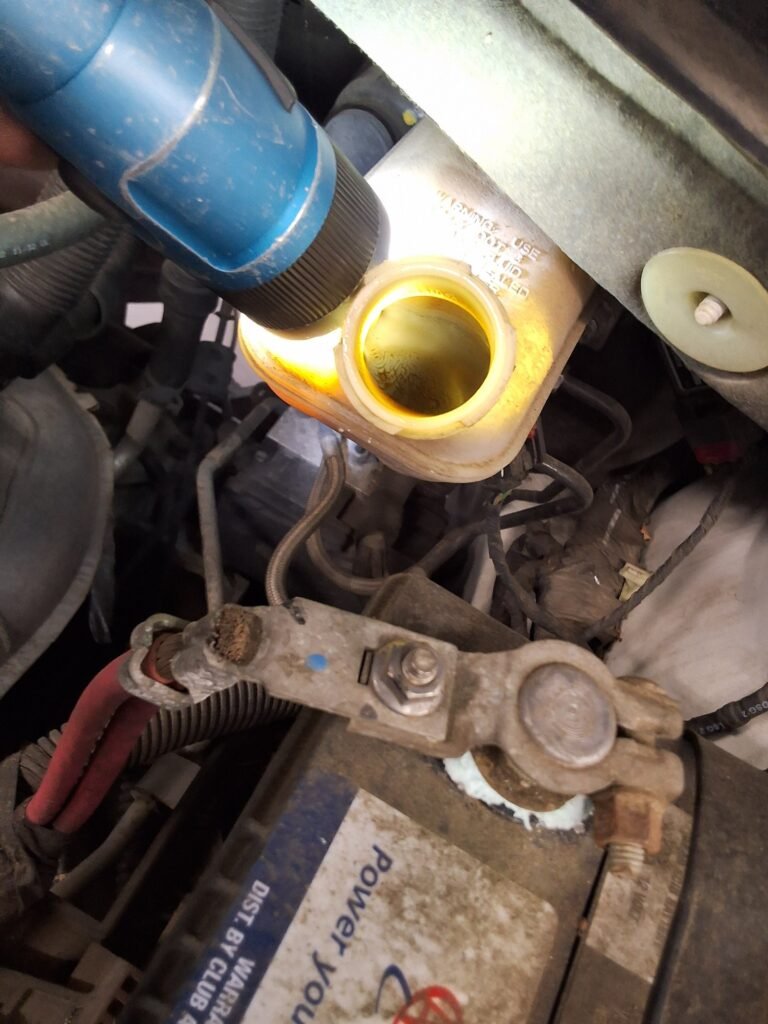
Testing found that the brake master cylinder was not operating properly.
The repair plan was to replace the master cylinder, bleed the system and then test the brakes again.
That last step is important.
Replacing a confirmed failed component is not the end of the process.
You still need to see how the complete brake system behaves afterward.
The Front Brakes Needed Attention Too
The pedal problem involved the hydraulic side of the braking system.
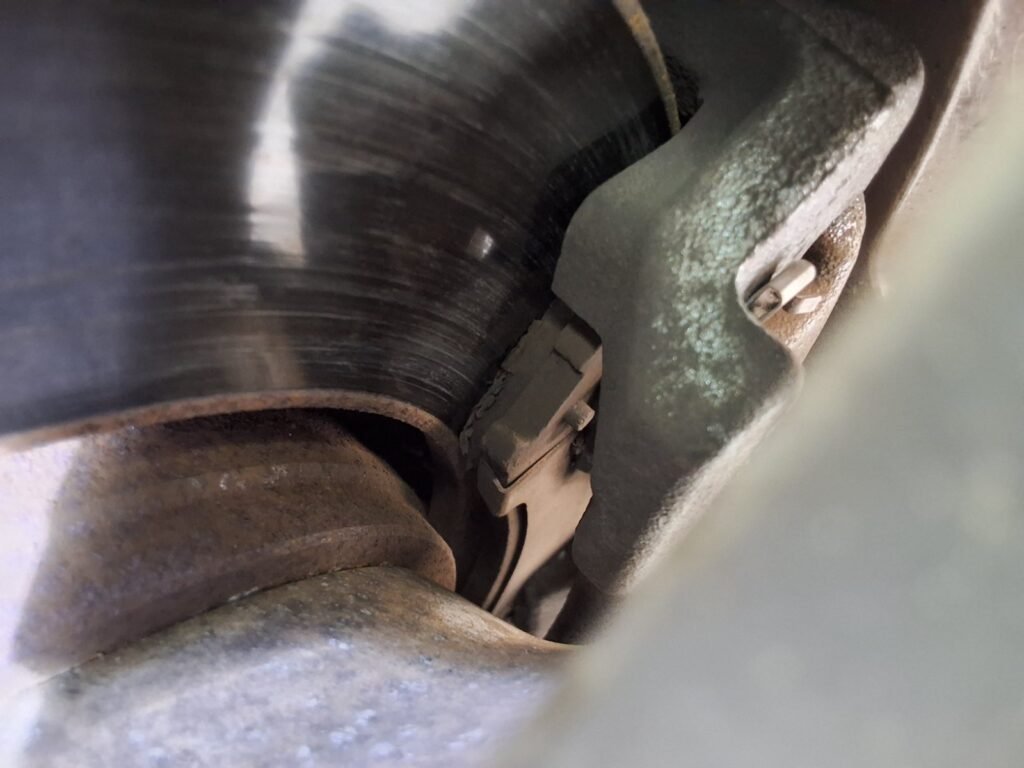
But the physical condition of the front brakes was another issue.
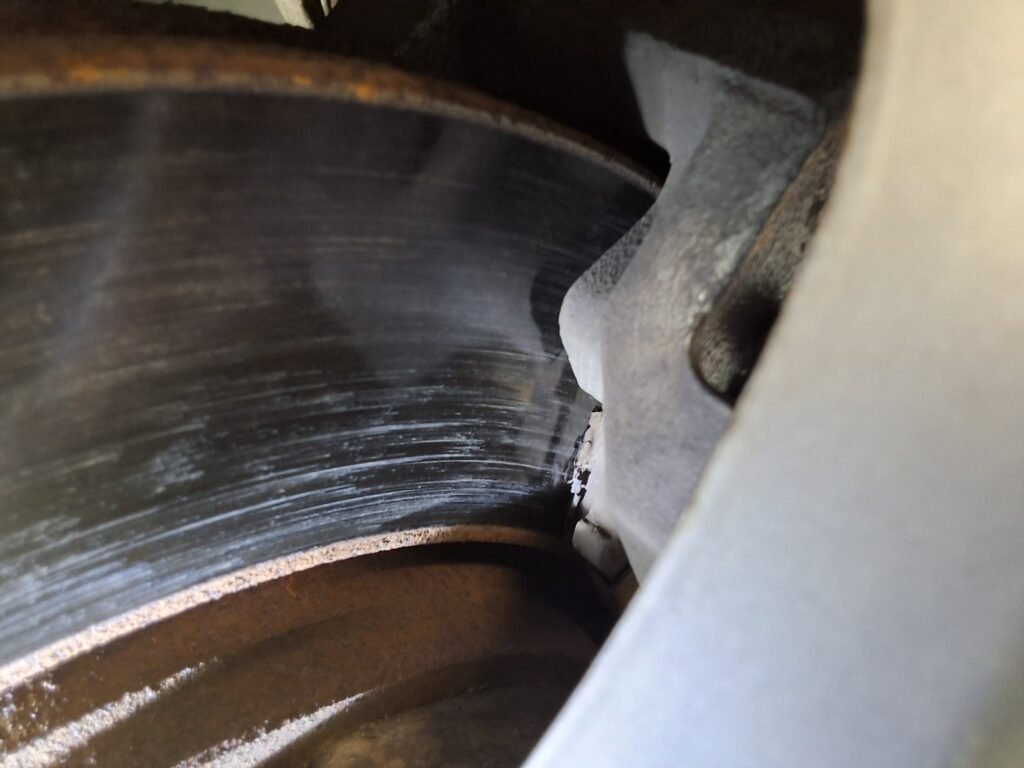
The front pads were measured at approximately 20% remaining.
The inspection also documented peeling pad material and blue discoloration on the rotors, which the technician noted as evidence of high heat.
The front brake pads and rotors were replaced.
This is a good example of why a brake inspection looks at more than one thing.
A hydraulic problem can affect pedal feel.
Pad and rotor condition affects the friction side of the system.
Both matter, and each has to be evaluated on its own evidence.
The Master Cylinder Was the First Confirmed Hydraulic Problem
The brake master cylinder creates hydraulic pressure when the brake pedal is applied.
On this vehicle, testing showed the master cylinder was not working properly.
After the master cylinder was replaced, the system could build pressure again.
That gave the technician a better opportunity to evaluate what the rest of the brake system was doing.
And during the bleeding process, another problem appeared.
A Second Brake Problem Showed Up During Bleeding
While the brake system was being bled after the master cylinder replacement, abnormal movement was observed at a rear caliper piston.
That led to additional rear brake work.
This part of the repair is important because it shows how diagnosis can develop as a system begins operating differently.
The master cylinder problem was confirmed first.
It was repaired.
Pressure returned.
Then another brake system condition became apparent during the bleeding and retesting process.
We do not need to say one problem caused every other problem on the vehicle.
Sometimes a repair simply puts the system into a condition where another issue becomes easier to identify.
Repair, Bleed, Retest
The completed brake work addressed several separate findings.
The master cylinder was replaced.
The brake fluid was serviced.
The worn front brake pads and rotors were replaced.
Additional rear brake work was performed after the abnormal caliper behavior was identified during bleeding.
Then the system could be checked again.
That sequence matters.
Diagnose. Repair the confirmed problem. Retest.
It is a much better approach than replacing parts based only on how the brake pedal feels.
Why No Visible Brake Fluid Leak Does Not End the Diagnosis
People often associate a low or sinking brake pedal with brake fluid leaking onto the ground.
An external leak is certainly something that needs to be checked.
But it is not the only possibility.
On this Town & Country, no external brake fluid leak was found during the diagnosis.
That is why the technician continued testing instead of stopping after a visual inspection.
The master cylinder was identified as not working properly even though fluid was not visibly leaking outside the system.
That distinction is useful for drivers.
No puddle does not automatically mean the hydraulic brake system is okay.
Pedal feel still matters.
Testing still matters.
Why Brake Repairs Can Develop in Stages
Brake systems are interconnected.
The pedal, master cylinder, brake fluid, hydraulic lines, calipers, pads and rotors all have different jobs.
When one part of the system is not working correctly, it can affect how the rest of the system behaves.
That is why a brake repair can sometimes reveal another condition during bleeding or retesting.
The goal is not to guess everything at the beginning.
The goal is to follow the evidence.
On this vehicle, the evidence led from a fading pedal to the master cylinder, then to another rear brake problem during bleeding, while the inspection separately documented significant wear at the front brakes.
That is a much more useful explanation than simply saying:
“It needed brakes.”
What Should You Do if the Brake Pedal Starts Sinking?
If your brake pedal begins feeling unusually soft, continues moving downward while you hold steady pressure, or suddenly feels different from normal, have the brake system inspected.
Do not assume the problem is only worn brake pads.
Do not assume it is automatically a master cylinder either.
The symptom tells the technician where to start.
Testing determines what the vehicle actually needs.
For this Town & Country, that process identified a hydraulic problem, front brake wear and another rear brake issue that became apparent during the repair.
That is what a complete brake diagnosis is supposed to do.
BRAKE PEDAL FAQ
Why would a brake pedal slowly move toward the floor?
Several brake system problems can affect pedal feel. The vehicle needs to be inspected and tested rather than diagnosed from the symptom alone.
Did this Town & Country have an external brake fluid leak?
No external brake fluid leak was found during the documented brake diagnosis.
What did testing find?
Testing found that the brake master cylinder was not operating properly.
Why was the brake system checked again after the master cylinder was replaced?
Retesting confirms whether the original problem has been corrected and can reveal other brake-system conditions once hydraulic pressure is restored.
Were the front brakes worn too?
Yes. The front pads were documented at approximately 20% remaining, with peeling pad material and blue rotor discoloration noted during inspection.
BRAKE REPAIR IN SHORELINE
If your brake pedal feels soft, begins sinking under steady pressure or simply feels different than normal, we can inspect the system and explain what we find.
Chuck’s Auto Repair – Shoreline
14501 15th Ave NE
Shoreline, WA 98155
206-368-0980
Schedule online here Book Online / Schedule Appointment