Catalytic converter theft has not gone away.
Around Puget Sound, police in at least one nearby community had already recorded more reported converter thefts in the first part of 2026 than during all of 2025.
And those are only the thefts that made it into police reports.
For one Toyota Sequoia that came to Chuck’s Auto Repair – Shoreline, the problem was very real.
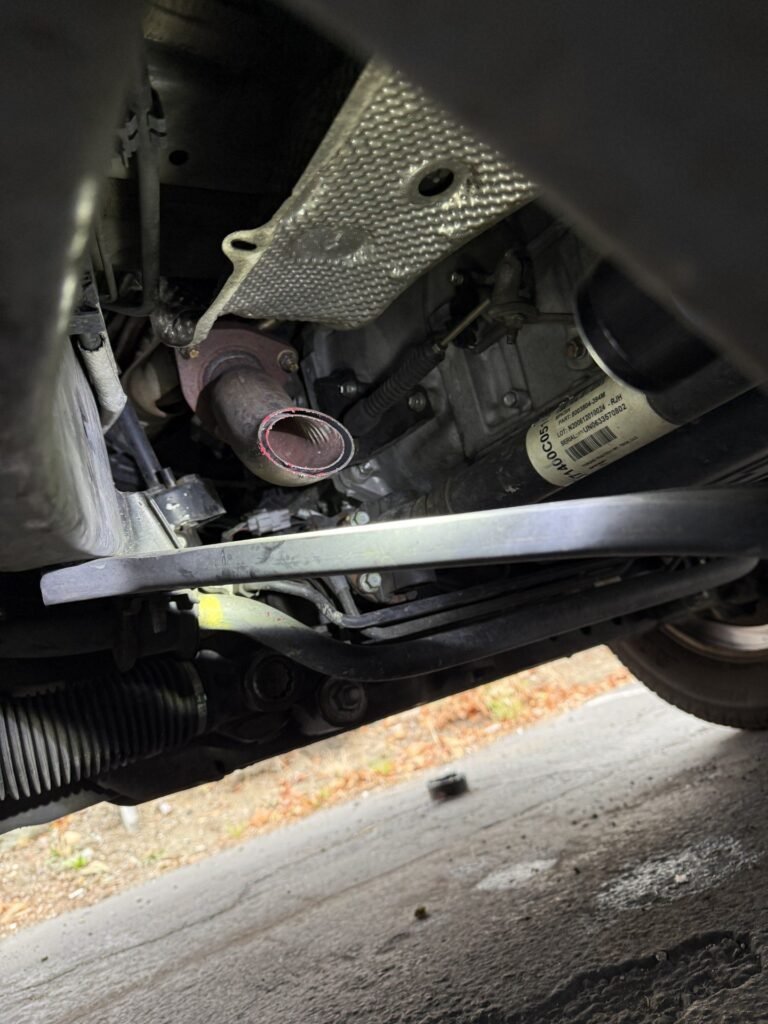
Both front catalytic converters had been cut out and stolen.
One of the downstream oxygen sensors was gone too.
What initially sounds like one stolen exhaust part can quickly become a much larger repair.
Both Front Catalytic Converters Were Gone
The 2007 Toyota Sequoia came in specifically for a catalytic converter theft inspection.
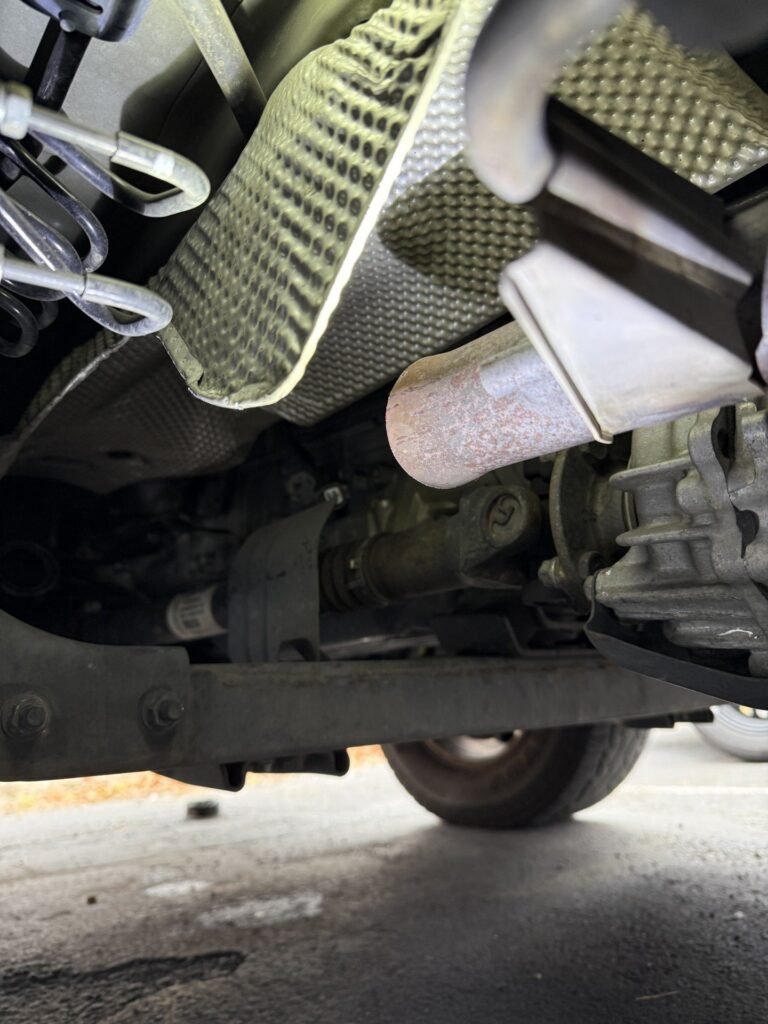
When we inspected the exhaust system, both front catalytic converters had been cut from the vehicle.
The front oxygen sensors were still in place and appeared okay.
The downstream oxygen sensor on the passenger side was missing along with the stolen exhaust components.
That is an important part of understanding catalytic converter theft.
Thieves are not carefully disassembling the exhaust system.
They are trying to remove valuable components quickly.
That can leave the vehicle with missing sensors, cut exhaust sections and other damage that has to be evaluated before the repair can be planned.
It Was Not Just the Catalytic Converters
The theft affected more than the two converters.
One downstream oxygen sensor was missing too.
Oxygen sensors are part of the engine management and emissions system. They provide information the vehicle uses to monitor exhaust conditions and catalytic converter operation.
That meant replacing the stolen converters alone would not complete this repair.
The missing sensor also had to be replaced.
This is one reason catalytic converter theft can become expensive so quickly.
What disappears in a few minutes can involve multiple exhaust and electronic components before the vehicle is put back together correctly.
Why Are Catalytic Converters Stolen?
Catalytic converters contain precious metals used to help reduce harmful exhaust emissions.
Those metals have resale value.
The converters are also located underneath the vehicle, and on some trucks and SUVs there is enough ground clearance for someone to reach the exhaust system relatively quickly.
That combination has made catalytic converters an attractive target for thieves.
The exact vehicles targeted can change, and no vehicle is completely immune.
What Did the Sequoia Need?
After the damage was inspected, the repair plan included:
Both front catalytic converters.
The missing passenger side downstream oxygen sensor.
The hardware and gaskets required to reinstall the exhaust components.
Verification of the repair after installation.
This was not a matter of simply welding one small exhaust pipe back together.
Two major emissions components had been removed from the vehicle.
Why Catalytic Converter Theft Can Become Such an Expensive Repair
People sometimes hear “stolen catalytic converter” and picture one small exhaust component.
The reality can be much different.
Depending on the vehicle, a theft may involve:
More than one catalytic converter.
Oxygen sensors.
Cut exhaust pipes.
Mounting hardware gaskets.
Electrical connectors or wiring.
Diagnostic work.
Installation labor.
And sometimes additional exhaust repairs.
Parts availability can also affect the repair process.
That is why two vehicles that both experience catalytic converter theft may require very different repairs.
We do not quote another vehicle based on what happened to this Sequoia.
The damaged vehicle has to be inspected first.
The Check Engine Light May Come On Too
A missing catalytic converter or oxygen sensor can cause warning lights because the vehicle is no longer seeing the exhaust information it expects.
This Sequoia had its check engine light on during the inspection.
That was consistent with the exhaust and sensor problems already visible underneath the vehicle.
Once the stolen components are replaced, the system still needs to be checked and the vehicle verified after the repair.
If a warning light returns afterward, additional diagnosis may be needed.
What Should You Do if You Think Your Catalytic Converter Was Stolen?
One of the most obvious signs is often the sound.
A vehicle with a converter cut from the exhaust may suddenly sound extremely loud when it starts.
If something sounds dramatically different, do not assume it is simply a muffler problem.
Have the exhaust inspected.
It is also a good idea to report the theft to law enforcement. Take photos of the damage if it is safe to do so and contact your insurance company and ask what documentation they require, avoid touching or disturbing evidence unnecessarily. Also have the vehicle inspected before authorizing repairs.
Insurance coverage varies by policy, so the repair shop should not promise what an insurance company will or will not cover.
Documentation Can Matter for an Insurance Claim
Catalytic converter theft is different from a normal worn out exhaust component.
There may be an insurance claim involved.
Clear documentation can help establish what was actually missing or damaged.
That may include photographs, technician findings and an itemized repair estimate.
Our job is to document what we see and what the vehicle needs.
The insurance company determines coverage under the customer’s policy.
Can You Make Catalytic Converter Theft Harder?
There is no device or parking strategy that can guarantee a catalytic converter will never be stolen.
There are, however, ways to make the vehicle a less convenient target.
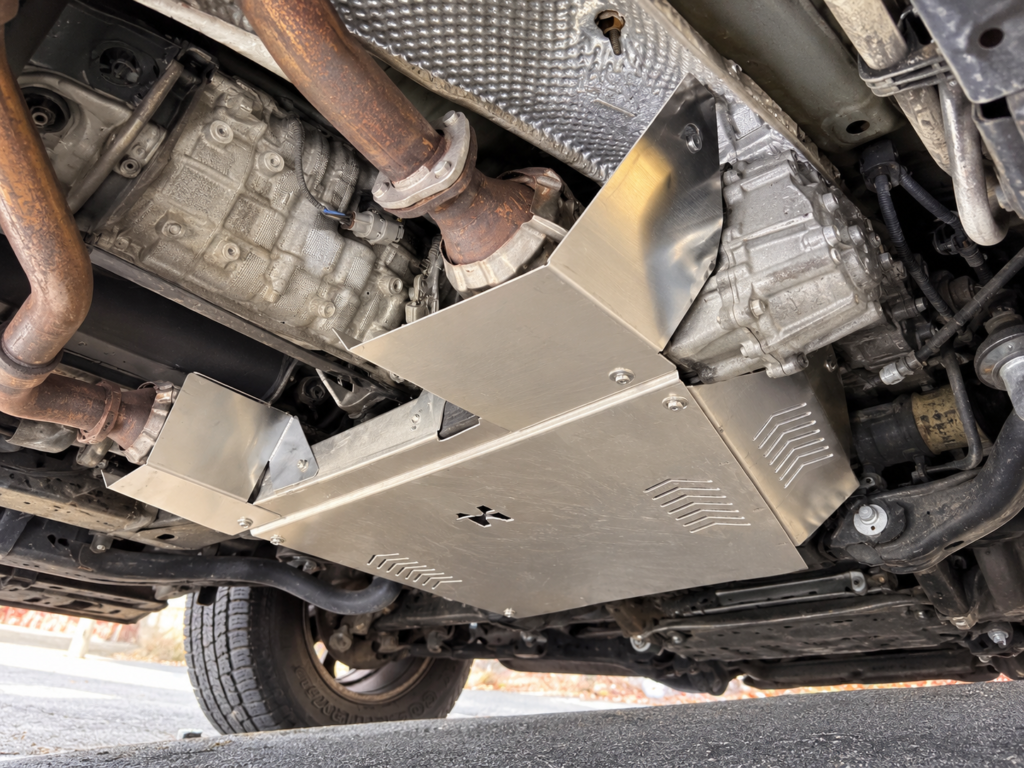
Police agencies have recommended measures such as installing a catalytic converter shield or cage. Engraving the vehicle VIN or other identifying information on the converter some are using a catalytic converter alarm. Parking inside a locked garage when possible and choosing well lit, visible parking areas.
The goal is not to make theft impossible. The goal is to add time, noise, visibility or identification that may make another vehicle look easier to a thief.
A Shield Is a Deterrent, Not a Guarantee
A catalytic converter shield does not make a vehicle theft proof.
A determined thief with enough time and tools may still be able to defeat a protective device.
But theft is often about speed.
Anything that makes the job slower, louder or more difficult can change the calculation for someone looking for an easy target.
That is why shields and cages are commonly discussed as one layer of protection rather than a guarantee.
Catalytic Converter Theft Has Not Disappeared
Converter theft is not occurring at the extraordinary levels seen during the worst years of the problem.
But it has not disappeared either.
Nearby police agencies have reported renewed activity during 2026, and recent Seattle area reports continue to document vehicles being hit.
For the person who walks outside, starts the vehicle and suddenly hears an exhaust system roaring underneath the floor, the statistics do not matter very much.
The problem is immediate.
For this Toyota Sequoia, both front catalytic converters were gone.
The repair required two replacement converters and a downstream oxygen sensor before the exhaust and emissions system could be put back together.
That is a very expensive lesson in how quickly a few minutes of theft can turn into a major vehicle repair.
CATALYTIC CONVERTER THEFT FAQ
How do I know if my catalytic converter was stolen?
A sudden extremely loud exhaust sound is a common clue. There may also be a check engine light, visible cut exhaust pipes or missing components underneath the vehicle.
Can more than the catalytic converter be damaged during a theft?
Yes. Oxygen sensors, wiring, exhaust pipes, mounting hardware and nearby components can also be damaged or removed.
What was stolen from this Toyota Sequoia?
Both front catalytic converters had been cut out and stolen. One passenger side downstream oxygen sensor was missing as well.
Did both oxygen sensors get stolen?
No. The inspection documented that the front oxygen sensors were still present and appeared okay. One downstream sensor on the passenger side was missing.
Does a catalytic converter shield guarantee my converter will not be stolen?
No. Shields and cages are deterrents. They may make access more difficult or time consuming, but they cannot guarantee that a theft will never occur.
Will insurance pay for catalytic converter theft?
Coverage depends on the individual policy and circumstances. Contact your insurance company to determine whether your policy covers the theft and what documentation they require.
Should I report catalytic converter theft to police?
Yes. Reporting the theft creates an official record and helps law enforcement understand where and when theft activity is occurring.
CATALYTIC CONVERTER REPAIR IN SHORELINE
If your vehicle suddenly becomes extremely loud or you believe something has been cut from the exhaust system, we can inspect the damage and explain what needs to be repaired.
Chuck’s Auto Repair – Shoreline
14501 15th Ave NE
Shoreline, WA 98155
206-368-0980
Schedule through the Book Online / Schedule Appointment.