What Actually Gets Replaced During a 3.5 EcoBoost F-150 Timing System Repair?
When someone hears “timing chain repair,” it can sound like one worn chain gets removed and a new one goes on.
A major timing system repair on a 3.5L EcoBoost F-150 can be much more involved than that.
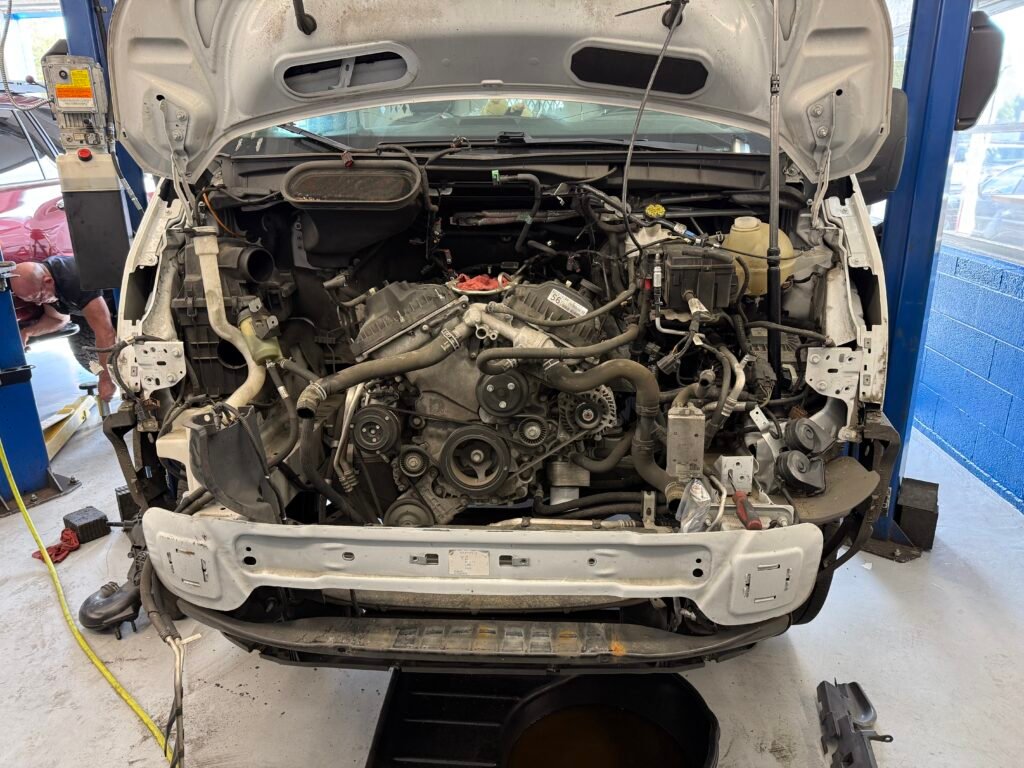
We recently repaired a 2019 Ford F-150 XLT with the 3.5L EcoBoost at Chuck’s Auto Repair – Shoreline. The truck had roughly 113,500 miles, and the repair involved the timing-chain system along with several related camshaft-timing components.
The owner also chose to have the water pump replaced during the same repair.
That last part is worth explaining because the water pump was not being presented as the cause of the timing-system problem.
The owner chose to replace it while the engine was already apart to reduce overlapping labor and avoid another separate period of vehicle downtime later.
That real repair gives us a good opportunity to answer a question customers understandably ask when they see a major engine estimate:
“Why are there so many parts if I’m getting a timing chain replaced?”
Let’s look at what is actually involved.
The Timing Chain Is Only One Part of the Timing System
The timing system keeps the crankshaft and camshafts working together in the correct relationship as the engine runs.
The chain is a major part of that system, but it doesn’t work by itself.
Depending on the exact F-150, model year, engine configuration, inspection findings, and repair being performed, timing-system work can involve several components behind the engine’s front cover.
That’s why we don’t assume every 3.5L EcoBoost F-150 receives exactly the same parts.
We’ll check your exact year and model, identify which system is in the truck, and determine what the repair actually requires.
For the real 2019 F-150 we’re using in this article, the repair order confirms a full timing-chain-system repair along with multiple camshaft-timing components and the related parts needed to open and reseal the engine.
Camshaft Phasers Are Part of the Story Too
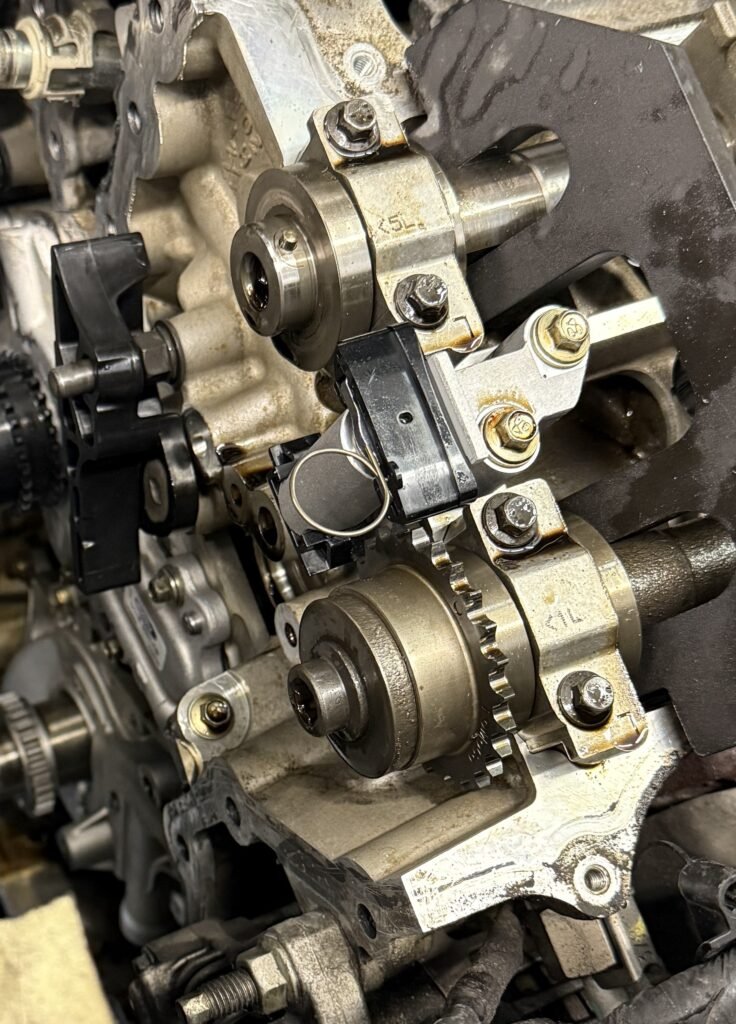
The actual estimate for this F-150 included left and right intake camshaft phasers along with two additional engine timing camshaft sprockets.
These components are part of Ford’s variable camshaft timing system.
In simple terms, the engine doesn’t keep the camshafts in one fixed position under every operating condition. Variable camshaft timing allows the engine management system to adjust camshaft timing as the engine operates.
That makes the phasers more sophisticated than a simple fixed gear.
It also helps explain why a major timing repair can involve much more than putting a new chain around the existing components and closing the engine back up.
What Do the Chain, Guides and Tensioning System Do?
The chain has to remain properly controlled while the engine is operating.
The surrounding timing system manages where that chain runs and maintains the correct tension.
This is one reason we use the term timing system repair rather than automatically reducing every job to “a timing chain.”
If inspection shows other timing components need replacement, those components become part of the repair plan.
The exact parts still depend on the truck.
You don’t need to determine which chains, guides, tensioners, or camshaft-timing components your F-150 has before calling us. We’ll check the exact year and model and explain what applies.
Opening the Engine Also Means Resealing It Correctly
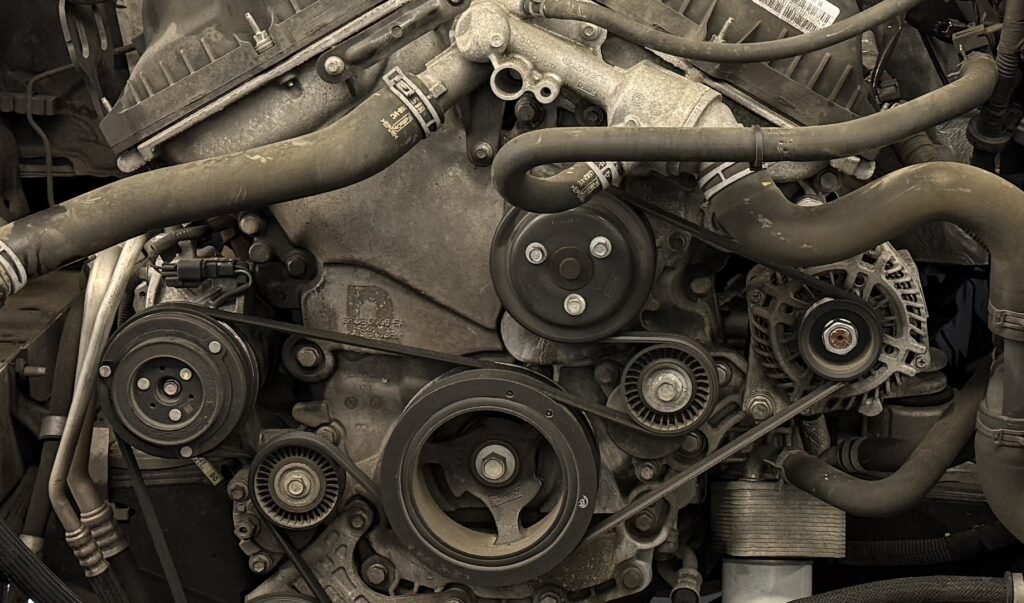
Getting to the timing components requires significant engine disassembly.
Once that work is complete, everything that was opened has to be properly resealed and reassembled.
The repair order for this F-150 included a valve cover gasket set along with other related service parts.
That may not sound as interesting as a timing chain or camshaft phaser, but sealing components matter.
A successful timing repair isn’t finished when the new timing parts are installed.
The engine still has to go back together correctly.
Oil, Filter and Coolant Become Part of the Repair Too
A major engine repair can also require fluids and normal service items as part of putting the truck back into operation.
This F-150 repair order included engine coolant and a new oil filter, along with other related service materials.
That doesn’t mean every timing-system estimate will look identical.
It means the complete repair has to account for what is removed, drained, opened, replaced, and refilled during the job.
This is another reason the final estimate can contain parts that don’t have the words “timing chain” in their description.
Why Did This Owner Replace the Water Pump at the Same Time?
This is an important distinction.
The owner did not request the water pump because we were saying the timing-system problem automatically meant the water pump had failed.
They are different systems.
The timing system controls the relationship between the crankshaft and camshafts.
The water pump circulates coolant through the engine’s cooling system.
On this particular F-150, the owner decided that while the larger engine repair was already underway, it made sense to replace the water pump during the same visit.
The goal was practical:
reduce duplicated labor and reduce the chance of scheduling another separate period of vehicle downtime later.
That was an owner-approved repair-planning decision on this truck.
It is not a rule that every 3.5L EcoBoost timing-system repair automatically requires a new water pump.
“Since You’re Already in There” Doesn’t Mean Replace Everything
This is where a good conversation matters during a major repair.
There are really different reasons a part might appear on an estimate.
Parts required to perform the diagnosed repair
These are components necessary to complete the timing-system work correctly.
Parts inspection shows need attention
Sometimes another component has a verified problem of its own.
Optional work that may make sense because labor or access overlaps
The water pump on this F-150 falls into this third category.
The owner chose to have it replaced during the larger job because the timing of the work made sense for the owner’s priorities.
That doesn’t mean we turn every major repair into an excuse to replace everything nearby.
We’ll explain what is required, what inspection shows, and where there may be meaningful labor overlap.
Then you can decide what makes sense for your truck.
Why the Exact F-150 Year Matters
The 3.5L EcoBoost has been used in F-150s across multiple model years, and Ford has made changes to the engine and timing/VCT systems over time.
So we don’t want a customer finding a repair list for one generation of F-150 online and assuming it automatically applies to another.
That’s also why you don’t need to research Ford part numbers or figure out which generation of timing system you have before making an appointment.
We’ll check your exact year and model.
Then we’ll verify what system is in the truck and what repair procedure applies.
How Do We Decide What Actually Needs to Be Replaced?
A repair like this should start with the vehicle, not an internet parts list.
We look at the customer’s concern, the exact F-150 and engine, what testing and inspection show, and what has to come apart to perform the confirmed repair.
From there, we can separate:
what is required now
from
what may make sense to consider while the truck is already apart.
That distinction is important on a repair this involved.
Is a Cam Phaser the Same Thing as a Timing Chain?
No.
They’re part of the same broader timing system, but they have different jobs.
The chain mechanically connects the timing system.
The camshaft phasers allow camshaft timing to be adjusted during engine operation.
That’s why an estimate can legitimately contain both timing-chain components and camshaft-timing components.
Does Every 3.5 EcoBoost Timing Repair Need a Water Pump?
No.
The water pump on the real F-150 in this article was replaced at the owner’s request while the larger repair was underway.
The decision was made to take advantage of labor/access overlap and reduce another separate period of vehicle downtime.
We’ll inspect the truck and explain whether there is any reason to discuss additional work during the repair.
What Makes a 3.5 EcoBoost Timing System Repair Expensive?
Several things can affect the cost.
The biggest is usually the amount of labor involved in reaching the timing system, correctly setting up the engine timing, replacing the required components, resealing the engine, refilling fluids, and verifying the repair afterward.
Parts requirements can also change depending on the exact model year and what inspection confirms.
That’s why we don’t publish one universal price for a 3.5L EcoBoost timing-system repair.
We need to see the truck first.
What If My F-150 Is Making a Timing Area Noise?
A noise by itself isn’t enough to order a timing-system repair.
Different engine concerns can produce sounds that customers describe as a rattle, tick, clatter, or knock.
We’ll check the exact year and model, listen to the concern under the conditions where it occurs, and determine where the noise is actually coming from before recommending a repair.
Ford has published service guidance for certain 2017–2020 3.5L EcoBoost F-150s involving VCT/cam-phaser noise, but that still doesn’t make every engine noise a cam-phaser diagnosis.
A Major Timing Repair Is a System Repair
The phrase “timing chain replacement” can make a job like this sound much simpler than it really is.
On the real 2019 F-150 in this article, the repair involved the timing-chain system, multiple camshaft-timing components, engine sealing parts, fluids and related service items.
The owner then made a separate decision to replace the water pump while the truck was already apart to reduce overlapping labor and future downtime.
That’s the part we think customers deserve to understand.
You don’t need to walk in knowing every part your F-150 needs.
That’s our job.
If your 3.5L EcoBoost F-150 needs timing-system diagnosis or you’ve already been told it needs major timing work, we’ll check the exact year and model, verify the repair, and explain what actually needs to be replaced and why.
Ford F-150 Timing System Repair in Shoreline
Need help with a 3.5L EcoBoost F-150?
Call Chuck’s Auto Repair – Shoreline at 206-368-0980 or schedule service HERE.
We’re located at 14501 15th Ave NE, Shoreline, WA 98155.
We’ll inspect the truck, explain what we find, and help separate what needs attention now from any optional repair-planning decisions that may make sense while the engine is already apart.